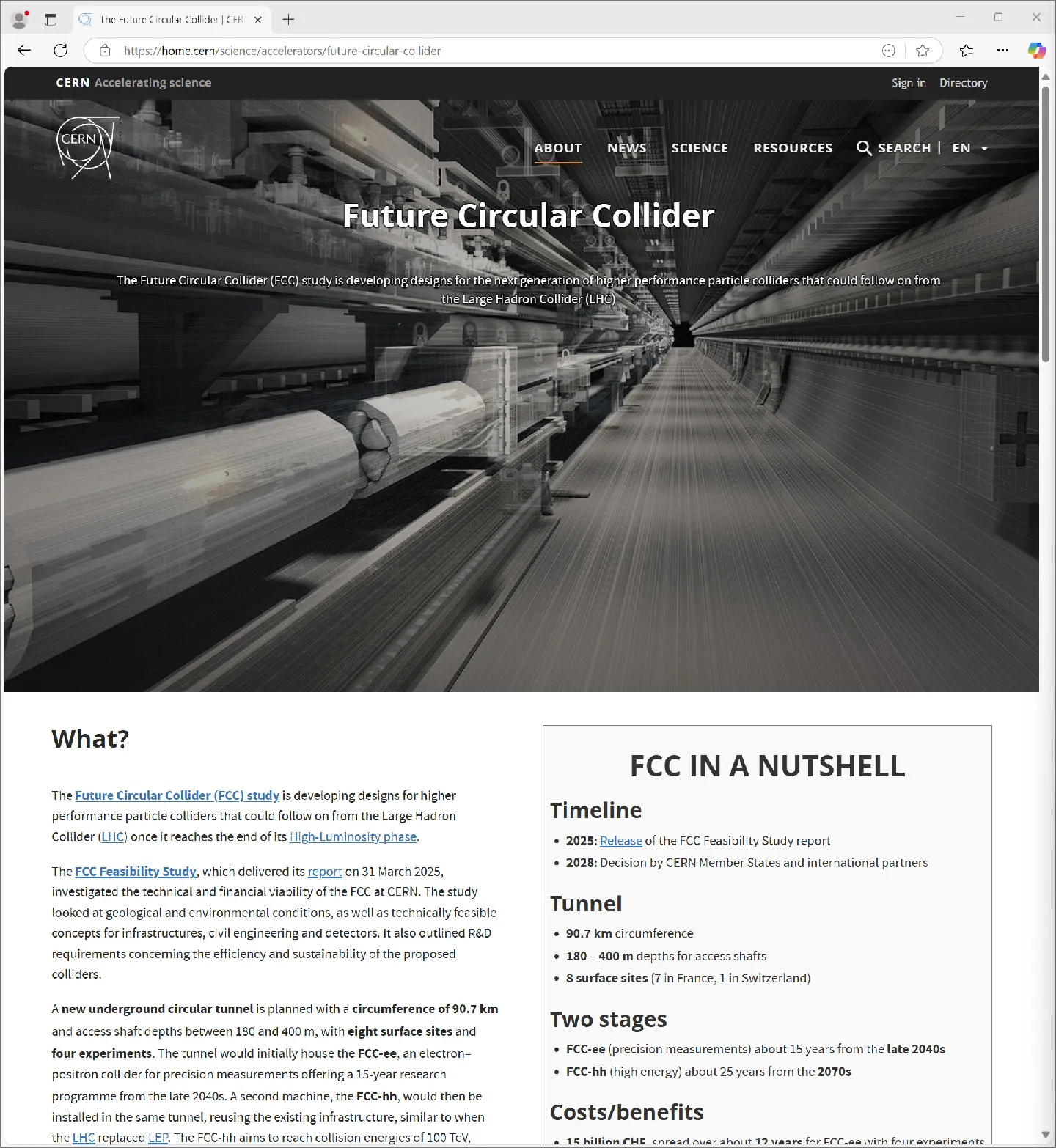
Artistic schematic map showing a possible location for the 90.7 km Future Circular Collider, 180 to 400 m depths for access shafts, 8 surface sites (7 in France, 1 in Switzerland) (Image: CERN)Artistic schematic map showing a possible location for the 90.7 km Future Circular Collider, 180 to 400 m depths for access shafts, 8 surface sites (7 in France, 1 in Switzerland) (Image: CERN)Artistic schematic map showing a possible location for the 90.7 km Future Circular Collider, 180 to 400 m depths for access shafts, 8 surface sites (7 in France, 1 in Switzerland) (Image: CERN)Artistic schematic map showing a possible location for the 90.7 km Future Circular Collider, 180 to 400 m depths for access shafts, 8 surface sites (7 in France, 1 in Switzerland) (Image: CERN)Artistic schematic map showing a possible location for the 90.7 km Future Circular Collider, 180 to 400 m depths for access shafts, 8 surface sites (7 in France, 1 in Switzerland) (Image: CERN)Artistic schematic map showing a possible location for the 90.7 km Future Circular Collider, 180 to 400 m depths for access shafts, 8 surface sites (7 in France, 1 in Switzerland) (Image: CERN)Artistic schematic map showing a possible location for the 90.7 km Future Circular Collider, 180 to 400 m depths for access shafts, 8 surface sites (7 in France, 1 in Switzerland) (Image: CERN)Artistic schematic map showing a possible location for the 90.7 km Future Circular Collider, 180 to 400 m depths for access shafts, 8 surface sites (7 in France, 1 in Switzerland) (Image: CERN)Artistic schematic map showing a possible location for the 90.7 km Future Circular Collider, 180 to 400 m depths for access shafts, 8 surface sites (7 in France, 1 in Switzerland) (Image: CERN)Artistic schematic map showing a possible location for the 90.7 km Future Circular Collider, 180 to 400 m depths for access shafts, 8 surface sites (7 in France, 1 in Switzerland) (Image: CERN)
Artistic schematic map showing a possible location for the 90.7 km Future Circular Collider, 180 to 400 m depths for access shafts, 8 surface sites (7 in France, 1 in Switzerland) (Video: CERN)Artistic schematic map showing a possible location for the 90.7 km Future Circular Collider, 180 to 400 m depths for access shafts, 8 surface sites (7 in France, 1 in Switzerland) (Video: CERN)Artistic schematic map showing a possible location for the 90.7 km Future Circular Collider, 180 to 400 m depths for access shafts, 8 surface sites (7 in France, 1 in Switzerland) (Video: CERN)Artistic schematic map showing a possible location for the 90.7 km Future Circular Collider, 180 to 400 m depths for access shafts, 8 surface sites (7 in France, 1 in Switzerland) (Video: CERN)
While the permitting submissions in Switzerland are still ongoing for the FCC studies, the first drilling works for the FCC project have officially started this week in the Mandallaz area, on the French side. These geological drillings and the accompanying seismic investigations mark a first key step in the FCC Site investigation campaign. After reaching a depth of 14 meters, the team encountered the molasse layer. (Image: CERN)<blockquote> <blockquote> <blockquote> </blockquote> </blockquote> </blockquote> FCC réunion publique à Challex-Pougny du 10 décembre 2024. <br /> L’équipe du CERN, en présence de représentants des services de l’État, des communes et de la Commission nationale du débat public, vient à la rencontre des habitants pour leur présenter et échanger sur les investigations de sous-sol menées dans leur commune, dans le cadre de l’étude de faisabilité d’un éventuel Futur Collisionneur Circulaire (FCC).<br /> Sept réunions d’information sont organisées au cours du mois de décembre, à destination des communes françaises concernées par les études de sous-sol.<br /> Le CERN dialogue également avec le canton de Genève, où des réunions seront aussi organisées à partir de février 2025, en lien avec le calendrier des études de sous-sol. (Video: CERN)
Describing the baseline scenario for a 91km underground tunnel that could successively host FCC-ee and FCC-hh. The ongoing investigations are part of the ongoing feasibility study for the potential Future Circular Collider project that could succeed the LHC. The identified scenario complies with an ECO-design and the Avoid-Reduce-Compensate approach. (Video: CERN)
Etude de faisabilité FCC<br /> fcc-faisabilite.eu (Video: CERN)
Raw footage of seismic investigations using vibrators and trucks for the Future Circular Collider (FCC) feasibility study. This B-roll is intended for press use and serves as supplementary visual material. (Video: CERN)
Raw footage of drilling activities conducted as part of the Future Circular Collider (FCC) feasibility study. This material is intended for press use and provides supplementary visuals of the site investigation process. (Video: CERN)
Raw footage of seismic investigations using vibrators and trucks for the Future Circular Collider (FCC) feasibility study. This B-roll is intended for press use and serves as supplementary visual material. (Video: CERN)
A bellow for the pilot sector of Einstein Telescope. (Image: CERN)Vacuum chamber for the storage ring of the FCC-ee being analysed in B113. (Image: CERN)Vacuum chamber for the collider ring of the FCC-ee being analysed in B113. A bellow for the pilot sector of Einstein Telescope. (Image: CERN)Vacuum chamber for the collider ring of the FCC-ee being analysed in B113. A bellow for the pilot sector of Einstein Telescope. (Image: CERN)Vacuum chamber for the collider ring of the FCC-ee being analysed in B113. A bellow for the pilot sector of Einstein Telescope. (Image: CERN)
While the permitting submissions in Switzerland are still ongoing for the FCC studies, the first drilling works for the FCC project have officially started this week in the Mandallaz area, on the French side. These geological drillings and the accompanying seismic investigations mark a first key step in the FCC Site investigation campaign. After reaching a depth of 14 meters, the team encountered the molasse layer. (Image: CERN)While the permitting submissions in Switzerland are still ongoing for the FCC studies, the first drilling works for the FCC project have officially started this week in the Mandallaz area, on the French side. These geological drillings and the accompanying seismic investigations mark a first key step in the FCC Site investigation campaign. After reaching a depth of 14 meters, the team encountered the molasse layer. (Image: CERN)While the permitting submissions in Switzerland are still ongoing for the FCC studies, the first drilling works for the FCC project have officially started this week in the Mandallaz area, on the French side. These geological drillings and the accompanying seismic investigations mark a first key step in the FCC Site investigation campaign. After reaching a depth of 14 meters, the team encountered the molasse layer. (Image: CERN)While the permitting submissions in Switzerland are still ongoing for the FCC studies, the first drilling works for the FCC project have officially started this week in the Mandallaz area, on the French side. These geological drillings and the accompanying seismic investigations mark a first key step in the FCC Site investigation campaign. After reaching a depth of 14 meters, the team encountered the molasse layer. (Image: CERN)While the permitting submissions in Switzerland are still ongoing for the FCC studies, the first drilling works for the FCC project have officially started this week in the Mandallaz area, on the French side. These geological drillings and the accompanying seismic investigations mark a first key step in the FCC Site investigation campaign. After reaching a depth of 14 meters, the team encountered the molasse layer. (Image: CERN)While the permitting submissions in Switzerland are still ongoing for the FCC studies, the first drilling works for the FCC project have officially started this week in the Mandallaz area, on the French side. These geological drillings and the accompanying seismic investigations mark a first key step in the FCC Site investigation campaign. After reaching a depth of 14 meters, the team encountered the molasse layer. (Image: CERN)While the permitting submissions in Switzerland are still ongoing for the FCC studies, the first drilling works for the FCC project have officially started this week in the Mandallaz area, on the French side. These geological drillings and the accompanying seismic investigations mark a first key step in the FCC Site investigation campaign. After reaching a depth of 14 meters, the team encountered the molasse layer. (Image: CERN)While the permitting submissions in Switzerland are still ongoing for the FCC studies, the first drilling works for the FCC project have officially started this week in the Mandallaz area, on the French side. These geological drillings and the accompanying seismic investigations mark a first key step in the FCC Site investigation campaign. After reaching a depth of 14 meters, the team encountered the molasse layer. (Image: CERN)While the permitting submissions in Switzerland are still ongoing for the FCC studies, the first drilling works for the FCC project have officially started this week in the Mandallaz area, on the French side. These geological drillings and the accompanying seismic investigations mark a first key step in the FCC Site investigation campaign. After reaching a depth of 14 meters, the team encountered the molasse layer. (Image: CERN)While the permitting submissions in Switzerland are still ongoing for the FCC studies, the first drilling works for the FCC project have officially started this week in the Mandallaz area, on the French side. These geological drillings and the accompanying seismic investigations mark a first key step in the FCC Site investigation campaign. After reaching a depth of 14 meters, the team encountered the molasse layer. (Image: CERN)While the permitting submissions in Switzerland are still ongoing for the FCC studies, the first drilling works for the FCC project have officially started this week in the Mandallaz area, on the French side. These geological drillings and the accompanying seismic investigations mark a first key step in the FCC Site investigation campaign. After reaching a depth of 14 meters, the team encountered the molasse layer. (Image: CERN)While the permitting submissions in Switzerland are still ongoing for the FCC studies, the first drilling works for the FCC project have officially started this week in the Mandallaz area, on the French side. These geological drillings and the accompanying seismic investigations mark a first key step in the FCC Site investigation campaign. After reaching a depth of 14 meters, the team encountered the molasse layer. (Image: CERN)While the permitting submissions in Switzerland are still ongoing for the FCC studies, the first drilling works for the FCC project have officially started this week in the Mandallaz area, on the French side. These geological drillings and the accompanying seismic investigations mark a first key step in the FCC Site investigation campaign. After reaching a depth of 14 meters, the team encountered the molasse layer. (Image: CERN)While the permitting submissions in Switzerland are still ongoing for the FCC studies, the first drilling works for the FCC project have officially started this week in the Mandallaz area, on the French side. These geological drillings and the accompanying seismic investigations mark a first key step in the FCC Site investigation campaign. After reaching a depth of 14 meters, the team encountered the molasse layer. (Image: CERN)While the permitting submissions in Switzerland are still ongoing for the FCC studies, the first drilling works for the FCC project have officially started this week in the Mandallaz area, on the French side. These geological drillings and the accompanying seismic investigations mark a first key step in the FCC Site investigation campaign. After reaching a depth of 14 meters, the team encountered the molasse layer. (Image: CERN)While the permitting submissions in Switzerland are still ongoing for the FCC studies, the first drilling works for the FCC project have officially started this week in the Mandallaz area, on the French side. These geological drillings and the accompanying seismic investigations mark a first key step in the FCC Site investigation campaign. After reaching a depth of 14 meters, the team encountered the molasse layer. (Image: CERN)While the permitting submissions in Switzerland are still ongoing for the FCC studies, the first drilling works for the FCC project have officially started this week in the Mandallaz area, on the French side. These geological drillings and the accompanying seismic investigations mark a first key step in the FCC Site investigation campaign. After reaching a depth of 14 meters, the team encountered the molasse layer. (Image: CERN)While the permitting submissions in Switzerland are still ongoing for the FCC studies, the first drilling works for the FCC project have officially started this week in the Mandallaz area, on the French side. These geological drillings and the accompanying seismic investigations mark a first key step in the FCC Site investigation campaign. After reaching a depth of 14 meters, the team encountered the molasse layer. (Image: CERN)While the permitting submissions in Switzerland are still ongoing for the FCC studies, the first drilling works for the FCC project have officially started this week in the Mandallaz area, on the French side. These geological drillings and the accompanying seismic investigations mark a first key step in the FCC Site investigation campaign. After reaching a depth of 14 meters, the team encountered the molasse layer. (Image: CERN)While the permitting submissions in Switzerland are still ongoing for the FCC studies, the first drilling works for the FCC project have officially started this week in the Mandallaz area, on the French side. These geological drillings and the accompanying seismic investigations mark a first key step in the FCC Site investigation campaign. After reaching a depth of 14 meters, the team encountered the molasse layer. (Image: CERN)While the permitting submissions in Switzerland are still ongoing for the FCC studies, the first drilling works for the FCC project have officially started this week in the Mandallaz area, on the French side. These geological drillings and the accompanying seismic investigations mark a first key step in the FCC Site investigation campaign. After reaching a depth of 14 meters, the team encountered the molasse layer. (Image: CERN)While the permitting submissions in Switzerland are still ongoing for the FCC studies, the first drilling works for the FCC project have officially started this week in the Mandallaz area, on the French side. These geological drillings and the accompanying seismic investigations mark a first key step in the FCC Site investigation campaign. After reaching a depth of 14 meters, the team encountered the molasse layer. (Image: CERN)While the permitting submissions in Switzerland are still ongoing for the FCC studies, the first drilling works for the FCC project have officially started this week in the Mandallaz area, on the French side. These geological drillings and the accompanying seismic investigations mark a first key step in the FCC Site investigation campaign. After reaching a depth of 14 meters, the team encountered the molasse layer. (Image: CERN)While the permitting submissions in Switzerland are still ongoing for the FCC studies, the first drilling works for the FCC project have officially started this week in the Mandallaz area, on the French side. These geological drillings and the accompanying seismic investigations mark a first key step in the FCC Site investigation campaign. After reaching a depth of 14 meters, the team encountered the molasse layer. (Image: CERN)While the permitting submissions in Switzerland are still ongoing for the FCC studies, the first drilling works for the FCC project have officially started this week in the Mandallaz area, on the French side. These geological drillings and the accompanying seismic investigations mark a first key step in the FCC Site investigation campaign. After reaching a depth of 14 meters, the team encountered the molasse layer. (Image: CERN)While the permitting submissions in Switzerland are still ongoing for the FCC studies, the first drilling works for the FCC project have officially started this week in the Mandallaz area, on the French side. These geological drillings and the accompanying seismic investigations mark a first key step in the FCC Site investigation campaign. After reaching a depth of 14 meters, the team encountered the molasse layer. (Image: CERN)While the permitting submissions in Switzerland are still ongoing for the FCC studies, the first drilling works for the FCC project have officially started this week in the Mandallaz area, on the French side. These geological drillings and the accompanying seismic investigations mark a first key step in the FCC Site investigation campaign. After reaching a depth of 14 meters, the team encountered the molasse layer. (Image: CERN)While the permitting submissions in Switzerland are still ongoing for the FCC studies, the first drilling works for the FCC project have officially started this week in the Mandallaz area, on the French side. These geological drillings and the accompanying seismic investigations mark a first key step in the FCC Site investigation campaign. After reaching a depth of 14 meters, the team encountered the molasse layer. (Image: CERN)While the permitting submissions in Switzerland are still ongoing for the FCC studies, the first drilling works for the FCC project have officially started this week in the Mandallaz area, on the French side. These geological drillings and the accompanying seismic investigations mark a first key step in the FCC Site investigation campaign. After reaching a depth of 14 meters, the team encountered the molasse layer. (Image: CERN)While the permitting submissions in Switzerland are still ongoing for the FCC studies, the first drilling works for the FCC project have officially started this week in the Mandallaz area, on the French side. These geological drillings and the accompanying seismic investigations mark a first key step in the FCC Site investigation campaign. After reaching a depth of 14 meters, the team encountered the molasse layer. (Image: CERN)While the permitting submissions in Switzerland are still ongoing for the FCC studies, the first drilling works for the FCC project have officially started this week in the Mandallaz area, on the French side. These geological drillings and the accompanying seismic investigations mark a first key step in the FCC Site investigation campaign. After reaching a depth of 14 meters, the team encountered the molasse layer. (Image: CERN)While the permitting submissions in Switzerland are still ongoing for the FCC studies, the first drilling works for the FCC project have officially started this week in the Mandallaz area, on the French side. These geological drillings and the accompanying seismic investigations mark a first key step in the FCC Site investigation campaign. After reaching a depth of 14 meters, the team encountered the molasse layer. (Image: CERN)While the permitting submissions in Switzerland are still ongoing for the FCC studies, the first drilling works for the FCC project have officially started this week in the Mandallaz area, on the French side. These geological drillings and the accompanying seismic investigations mark a first key step in the FCC Site investigation campaign. After reaching a depth of 14 meters, the team encountered the molasse layer. (Image: CERN)While the permitting submissions in Switzerland are still ongoing for the FCC studies, the first drilling works for the FCC project have officially started this week in the Mandallaz area, on the French side. These geological drillings and the accompanying seismic investigations mark a first key step in the FCC Site investigation campaign. After reaching a depth of 14 meters, the team encountered the molasse layer. (Image: CERN)While the permitting submissions in Switzerland are still ongoing for the FCC studies, the first drilling works for the FCC project have officially started this week in the Mandallaz area, on the French side. These geological drillings and the accompanying seismic investigations mark a first key step in the FCC Site investigation campaign. After reaching a depth of 14 meters, the team encountered the molasse layer. (Image: CERN)While the permitting submissions in Switzerland are still ongoing for the FCC studies, the first drilling works for the FCC project have officially started this week in the Mandallaz area, on the French side. These geological drillings and the accompanying seismic investigations mark a first key step in the FCC Site investigation campaign. After reaching a depth of 14 meters, the team encountered the molasse layer. (Image: CERN)While the permitting submissions in Switzerland are still ongoing for the FCC studies, the first drilling works for the FCC project have officially started this week in the Mandallaz area, on the French side. These geological drillings and the accompanying seismic investigations mark a first key step in the FCC Site investigation campaign. After reaching a depth of 14 meters, the team encountered the molasse layer. (Image: CERN)While the permitting submissions in Switzerland are still ongoing for the FCC studies, the first drilling works for the FCC project have officially started this week in the Mandallaz area, on the French side. These geological drillings and the accompanying seismic investigations mark a first key step in the FCC Site investigation campaign. After reaching a depth of 14 meters, the team encountered the molasse layer. (Image: CERN)While the permitting submissions in Switzerland are still ongoing for the FCC studies, the first drilling works for the FCC project have officially started this week in the Mandallaz area, on the French side. These geological drillings and the accompanying seismic investigations mark a first key step in the FCC Site investigation campaign. After reaching a depth of 14 meters, the team encountered the molasse layer. (Image: CERN)While the permitting submissions in Switzerland are still ongoing for the FCC studies, the first drilling works for the FCC project have officially started this week in the Mandallaz area, on the French side. These geological drillings and the accompanying seismic investigations mark a first key step in the FCC Site investigation campaign. After reaching a depth of 14 meters, the team encountered the molasse layer. (Image: CERN)While the permitting submissions in Switzerland are still ongoing for the FCC studies, the first drilling works for the FCC project have officially started this week in the Mandallaz area, on the French side. These geological drillings and the accompanying seismic investigations mark a first key step in the FCC Site investigation campaign. After reaching a depth of 14 meters, the team encountered the molasse layer. (Image: CERN)While the permitting submissions in Switzerland are still ongoing for the FCC studies, the first drilling works for the FCC project have officially started this week in the Mandallaz area, on the French side. These geological drillings and the accompanying seismic investigations mark a first key step in the FCC Site investigation campaign. After reaching a depth of 14 meters, the team encountered the molasse layer. (Image: CERN)While the permitting submissions in Switzerland are still ongoing for the FCC studies, the first drilling works for the FCC project have officially started this week in the Mandallaz area, on the French side. These geological drillings and the accompanying seismic investigations mark a first key step in the FCC Site investigation campaign. After reaching a depth of 14 meters, the team encountered the molasse layer. (Image: CERN)While the permitting submissions in Switzerland are still ongoing for the FCC studies, the first drilling works for the FCC project have officially started this week in the Mandallaz area, on the French side. These geological drillings and the accompanying seismic investigations mark a first key step in the FCC Site investigation campaign. After reaching a depth of 14 meters, the team encountered the molasse layer. (Image: CERN)While the permitting submissions in Switzerland are still ongoing for the FCC studies, the first drilling works for the FCC project have officially started this week in the Mandallaz area, on the French side. These geological drillings and the accompanying seismic investigations mark a first key step in the FCC Site investigation campaign. After reaching a depth of 14 meters, the team encountered the molasse layer. (Image: CERN)While the permitting submissions in Switzerland are still ongoing for the FCC studies, the first drilling works for the FCC project have officially started this week in the Mandallaz area, on the French side. These geological drillings and the accompanying seismic investigations mark a first key step in the FCC Site investigation campaign. After reaching a depth of 14 meters, the team encountered the molasse layer. (Image: CERN)While the permitting submissions in Switzerland are still ongoing for the FCC studies, the first drilling works for the FCC project have officially started this week in the Mandallaz area, on the French side. These geological drillings and the accompanying seismic investigations mark a first key step in the FCC Site investigation campaign. After reaching a depth of 14 meters, the team encountered the molasse layer. (Image: CERN)While the permitting submissions in Switzerland are still ongoing for the FCC studies, the first drilling works for the FCC project have officially started this week in the Mandallaz area, on the French side. These geological drillings and the accompanying seismic investigations mark a first key step in the FCC Site investigation campaign. After reaching a depth of 14 meters, the team encountered the molasse layer. (Image: CERN)While the permitting submissions in Switzerland are still ongoing for the FCC studies, the first drilling works for the FCC project have officially started this week in the Mandallaz area, on the French side. These geological drillings and the accompanying seismic investigations mark a first key step in the FCC Site investigation campaign. After reaching a depth of 14 meters, the team encountered the molasse layer. (Image: CERN)While the permitting submissions in Switzerland are still ongoing for the FCC studies, the first drilling works for the FCC project have officially started this week in the Mandallaz area, on the French side. These geological drillings and the accompanying seismic investigations mark a first key step in the FCC Site investigation campaign. After reaching a depth of 14 meters, the team encountered the molasse layer. (Image: CERN)While the permitting submissions in Switzerland are still ongoing for the FCC studies, the first drilling works for the FCC project have officially started this week in the Mandallaz area, on the French side. These geological drillings and the accompanying seismic investigations mark a first key step in the FCC Site investigation campaign. After reaching a depth of 14 meters, the team encountered the molasse layer. (Image: CERN)While the permitting submissions in Switzerland are still ongoing for the FCC studies, the first drilling works for the FCC project have officially started this week in the Mandallaz area, on the French side. These geological drillings and the accompanying seismic investigations mark a first key step in the FCC Site investigation campaign. After reaching a depth of 14 meters, the team encountered the molasse layer. (Image: CERN)While the permitting submissions in Switzerland are still ongoing for the FCC studies, the first drilling works for the FCC project have officially started this week in the Mandallaz area, on the French side. These geological drillings and the accompanying seismic investigations mark a first key step in the FCC Site investigation campaign. After reaching a depth of 14 meters, the team encountered the molasse layer. (Image: CERN)While the permitting submissions in Switzerland are still ongoing for the FCC studies, the first drilling works for the FCC project have officially started this week in the Mandallaz area, on the French side. These geological drillings and the accompanying seismic investigations mark a first key step in the FCC Site investigation campaign. After reaching a depth of 14 meters, the team encountered the molasse layer. (Image: CERN)While the permitting submissions in Switzerland are still ongoing for the FCC studies, the first drilling works for the FCC project have officially started this week in the Mandallaz area, on the French side. These geological drillings and the accompanying seismic investigations mark a first key step in the FCC Site investigation campaign. After reaching a depth of 14 meters, the team encountered the molasse layer. (Image: CERN)While the permitting submissions in Switzerland are still ongoing for the FCC studies, the first drilling works for the FCC project have officially started this week in the Mandallaz area, on the French side. These geological drillings and the accompanying seismic investigations mark a first key step in the FCC Site investigation campaign. After reaching a depth of 14 meters, the team encountered the molasse layer. (Image: CERN)While the permitting submissions in Switzerland are still ongoing for the FCC studies, the first drilling works for the FCC project have officially started this week in the Mandallaz area, on the French side. These geological drillings and the accompanying seismic investigations mark a first key step in the FCC Site investigation campaign. After reaching a depth of 14 meters, the team encountered the molasse layer. (Image: CERN)While the permitting submissions in Switzerland are still ongoing for the FCC studies, the first drilling works for the FCC project have officially started this week in the Mandallaz area, on the French side. These geological drillings and the accompanying seismic investigations mark a first key step in the FCC Site investigation campaign. After reaching a depth of 14 meters, the team encountered the molasse layer. (Image: CERN)While the permitting submissions in Switzerland are still ongoing for the FCC studies, the first drilling works for the FCC project have officially started this week in the Mandallaz area, on the French side. These geological drillings and the accompanying seismic investigations mark a first key step in the FCC Site investigation campaign. After reaching a depth of 14 meters, the team encountered the molasse layer. (Image: CERN)While the permitting submissions in Switzerland are still ongoing for the FCC studies, the first drilling works for the FCC project have officially started this week in the Mandallaz area, on the French side. These geological drillings and the accompanying seismic investigations mark a first key step in the FCC Site investigation campaign. After reaching a depth of 14 meters, the team encountered the molasse layer. (Image: CERN)While the permitting submissions in Switzerland are still ongoing for the FCC studies, the first drilling works for the FCC project have officially started this week in the Mandallaz area, on the French side. These geological drillings and the accompanying seismic investigations mark a first key step in the FCC Site investigation campaign. After reaching a depth of 14 meters, the team encountered the molasse layer. (Image: CERN)While the permitting submissions in Switzerland are still ongoing for the FCC studies, the first drilling works for the FCC project have officially started this week in the Mandallaz area, on the French side. These geological drillings and the accompanying seismic investigations mark a first key step in the FCC Site investigation campaign. After reaching a depth of 14 meters, the team encountered the molasse layer. (Image: CERN)While the permitting submissions in Switzerland are still ongoing for the FCC studies, the first drilling works for the FCC project have officially started this week in the Mandallaz area, on the French side. These geological drillings and the accompanying seismic investigations mark a first key step in the FCC Site investigation campaign. After reaching a depth of 14 meters, the team encountered the molasse layer. (Image: CERN)While the permitting submissions in Switzerland are still ongoing for the FCC studies, the first drilling works for the FCC project have officially started this week in the Mandallaz area, on the French side. These geological drillings and the accompanying seismic investigations mark a first key step in the FCC Site investigation campaign. After reaching a depth of 14 meters, the team encountered the molasse layer. (Image: CERN)While the permitting submissions in Switzerland are still ongoing for the FCC studies, the first drilling works for the FCC project have officially started this week in the Mandallaz area, on the French side. These geological drillings and the accompanying seismic investigations mark a first key step in the FCC Site investigation campaign. After reaching a depth of 14 meters, the team encountered the molasse layer. (Image: CERN)While the permitting submissions in Switzerland are still ongoing for the FCC studies, the first drilling works for the FCC project have officially started this week in the Mandallaz area, on the French side. These geological drillings and the accompanying seismic investigations mark a first key step in the FCC Site investigation campaign. After reaching a depth of 14 meters, the team encountered the molasse layer. (Image: CERN)While the permitting submissions in Switzerland are still ongoing for the FCC studies, the first drilling works for the FCC project have officially started this week in the Mandallaz area, on the French side. These geological drillings and the accompanying seismic investigations mark a first key step in the FCC Site investigation campaign. After reaching a depth of 14 meters, the team encountered the molasse layer. (Image: CERN)While the permitting submissions in Switzerland are still ongoing for the FCC studies, the first drilling works for the FCC project have officially started this week in the Mandallaz area, on the French side. These geological drillings and the accompanying seismic investigations mark a first key step in the FCC Site investigation campaign. After reaching a depth of 14 meters, the team encountered the molasse layer. (Image: CERN)While the permitting submissions in Switzerland are still ongoing for the FCC studies, the first drilling works for the FCC project have officially started this week in the Mandallaz area, on the French side. These geological drillings and the accompanying seismic investigations mark a first key step in the FCC Site investigation campaign. After reaching a depth of 14 meters, the team encountered the molasse layer. (Image: CERN)While the permitting submissions in Switzerland are still ongoing for the FCC studies, the first drilling works for the FCC project have officially started this week in the Mandallaz area, on the French side. These geological drillings and the accompanying seismic investigations mark a first key step in the FCC Site investigation campaign. After reaching a depth of 14 meters, the team encountered the molasse layer. (Image: CERN)While the permitting submissions in Switzerland are still ongoing for the FCC studies, the first drilling works for the FCC project have officially started this week in the Mandallaz area, on the French side. These geological drillings and the accompanying seismic investigations mark a first key step in the FCC Site investigation campaign. After reaching a depth of 14 meters, the team encountered the molasse layer. (Image: CERN)While the permitting submissions in Switzerland are still ongoing for the FCC studies, the first drilling works for the FCC project have officially started this week in the Mandallaz area, on the French side. These geological drillings and the accompanying seismic investigations mark a first key step in the FCC Site investigation campaign. After reaching a depth of 14 meters, the team encountered the molasse layer. (Image: CERN)While the permitting submissions in Switzerland are still ongoing for the FCC studies, the first drilling works for the FCC project have officially started this week in the Mandallaz area, on the French side. These geological drillings and the accompanying seismic investigations mark a first key step in the FCC Site investigation campaign. After reaching a depth of 14 meters, the team encountered the molasse layer. (Image: CERN)While the permitting submissions in Switzerland are still ongoing for the FCC studies, the first drilling works for the FCC project have officially started this week in the Mandallaz area, on the French side. These geological drillings and the accompanying seismic investigations mark a first key step in the FCC Site investigation campaign. After reaching a depth of 14 meters, the team encountered the molasse layer. (Image: CERN)While the permitting submissions in Switzerland are still ongoing for the FCC studies, the first drilling works for the FCC project have officially started this week in the Mandallaz area, on the French side. These geological drillings and the accompanying seismic investigations mark a first key step in the FCC Site investigation campaign. After reaching a depth of 14 meters, the team encountered the molasse layer. (Image: CERN)While the permitting submissions in Switzerland are still ongoing for the FCC studies, the first drilling works for the FCC project have officially started this week in the Mandallaz area, on the French side. These geological drillings and the accompanying seismic investigations mark a first key step in the FCC Site investigation campaign. After reaching a depth of 14 meters, the team encountered the molasse layer. (Image: CERN)While the permitting submissions in Switzerland are still ongoing for the FCC studies, the first drilling works for the FCC project have officially started this week in the Mandallaz area, on the French side. These geological drillings and the accompanying seismic investigations mark a first key step in the FCC Site investigation campaign. After reaching a depth of 14 meters, the team encountered the molasse layer. (Image: CERN)While the permitting submissions in Switzerland are still ongoing for the FCC studies, the first drilling works for the FCC project have officially started this week in the Mandallaz area, on the French side. These geological drillings and the accompanying seismic investigations mark a first key step in the FCC Site investigation campaign. After reaching a depth of 14 meters, the team encountered the molasse layer. (Image: CERN)While the permitting submissions in Switzerland are still ongoing for the FCC studies, the first drilling works for the FCC project have officially started this week in the Mandallaz area, on the French side. These geological drillings and the accompanying seismic investigations mark a first key step in the FCC Site investigation campaign. After reaching a depth of 14 meters, the team encountered the molasse layer. (Image: CERN)While the permitting submissions in Switzerland are still ongoing for the FCC studies, the first drilling works for the FCC project have officially started this week in the Mandallaz area, on the French side. These geological drillings and the accompanying seismic investigations mark a first key step in the FCC Site investigation campaign. After reaching a depth of 14 meters, the team encountered the molasse layer. (Image: CERN)While the permitting submissions in Switzerland are still ongoing for the FCC studies, the first drilling works for the FCC project have officially started this week in the Mandallaz area, on the French side. These geological drillings and the accompanying seismic investigations mark a first key step in the FCC Site investigation campaign. After reaching a depth of 14 meters, the team encountered the molasse layer. (Image: CERN)While the permitting submissions in Switzerland are still ongoing for the FCC studies, the first drilling works for the FCC project have officially started this week in the Mandallaz area, on the French side. These geological drillings and the accompanying seismic investigations mark a first key step in the FCC Site investigation campaign. After reaching a depth of 14 meters, the team encountered the molasse layer. (Image: CERN)While the permitting submissions in Switzerland are still ongoing for the FCC studies, the first drilling works for the FCC project have officially started this week in the Mandallaz area, on the French side. These geological drillings and the accompanying seismic investigations mark a first key step in the FCC Site investigation campaign. After reaching a depth of 14 meters, the team encountered the molasse layer. (Image: CERN)